Tuesday, November 18, 2025

171+ Kids Bookshelf With Doors And Storage

Children's programs drayson.llu.edu

```html
Introduction: A Cozy Corner for Little Readers
Creating a dedicated space for your child's books not only encourages a love of reading but also helps keep their room organized. This DIY bookshelf with doors and storage provides both open shelving for displaying favorite books and closed storage for toys, art supplies, or less frequently used items. Let's get started on building a bookshelf that will grow with your child.
Materials You'll Need
  • Plywood sheets (Thickness and quantity depend on desired size. 3/4" is a good starting point)
  • Solid wood boards (For framing and trim, optional)
  • Wood screws (Various lengths)
  • Wood glue
  • Sandpaper (Various grits)
  • Primer
  • Paint (Child-safe and in desired colors)
  • Hinges (For the doors)
  • Magnetic catches or latches (For the doors)
  • Knobs or pulls (For the doors)
  • Wood filler
  • Safety glasses
  • Ear protection
  • Tools Required
  • Measuring tape
  • Pencil
  • Circular saw or table saw
  • Drill with various drill bits
  • Screwdriver
  • Sander
  • Clamps
  • Paint brushes or rollers
  • Level
  • Square
  • Jigsaw (optional, for decorative cuts)
  • Step 1: Plan and Design
    Before you start cutting wood, sketch out your bookshelf design. Decide on the overall dimensions, the number of shelves, and the size of the storage compartments behind the doors. Consider the height of your child and the size of their books when planning the shelf spacing. It's helpful to create a detailed drawing with all measurements clearly labeled.
    Step 2: Cut the Wood
    Using your measurements from Step 1, carefully cut all the pieces of plywood and solid wood to the required sizes. This includes the sides, top, bottom, shelves, back panel, door panels, and any framing pieces. Double-check your measurements before each cut to avoid mistakes. Always wear safety glasses and ear protection when using power tools.
    Step 3: Assemble the Frame
    Start by assembling the main frame of the bookshelf. Attach the sides to the top and bottom pieces using wood glue and screws. Use clamps to hold the pieces together while the glue dries. Make sure the frame is square by checking the corners with a square.
    Step 4: Install the Shelves
    Measure and mark the locations for the shelves inside the frame. Apply wood glue to the edges of the shelves and secure them with screws. Again, use clamps to hold the shelves in place while the glue dries. Ensure the shelves are level using a level.
    Step 5: Attach the Back Panel
    Cut a piece of plywood to fit the back of the bookshelf. Attach it to the frame using wood glue and screws. The back panel will help to stabilize the entire structure. Make sure it is flush with the edges of the frame.
    Step 6: Build and Install the Doors
    Construct the door panels from your cut plywood. If desired, add decorative trim to the doors using solid wood boards. Sand the door panels smooth. Attach the hinges to the doors and then to the bookshelf frame. Ensure the doors swing freely and align properly.
    Step 7: Install Magnetic Catches or Latches
    Install magnetic catches or latches on the inside of the bookshelf frame and on the door panels to keep the doors closed securely. This prevents the doors from swinging open unintentionally.
    Step 8: Add Knobs or Pulls
    Drill holes in the door panels for the knobs or pulls. Attach the knobs or pulls using screws. Choose knobs or pulls that are easy for your child to grip and use.
    Step 9: Sand, Fill, and Prime
    Sand all the surfaces of the bookshelf, including the doors, to create a smooth finish. Fill any screw holes or imperfections with wood filler. Once the wood filler is dry, sand it smooth. Apply a coat of primer to the entire bookshelf.
    Step 10: Paint and Decorate
    Paint the bookshelf with child-safe paint in your desired colors. Apply multiple coats of paint for a durable and even finish, allowing each coat to dry completely before applying the next. You can also add decorative elements such as stencils or decals to personalize the bookshelf.
    Step 11: Final Assembly and Placement
    Once the paint is completely dry, carefully inspect the bookshelf for any remaining imperfections. Touch up any areas as needed. Place the bookshelf in your child's room in a safe and accessible location.
    Conclusion: A Treasure Trove of Stories
    Congratulations! You've built a beautiful and functional bookshelf with doors and storage for your child. This DIY project not only provides a dedicated space for their books but also encourages a love of reading and helps keep their room tidy. Enjoy watching your child explore the world of stories from their cozy reading corner!
    ```

    Children's Programs

    Children's programs drayson.llu.edu

    7 Tips For Raising Caring Kids — Making Caring Common

    7 tips for raising caring kids — making caring common mcc.gse.harvard.edu

    Child And Youth Plan

    Child and youth plan yoursay.bmcc.nsw.gov.au

    185+ Wall Mounted Coat Rack With Storage, Hooks, And Shelf

    200,000+ best wall photos · 100% free download · pexels stock photos www.pexels.com

    Opening: Creating Your Own Wall-Mounted Coat Rack with Storage, Hooks, and Shelf Tired of cluttered hallways and missing coats? A wall-mounted coat rack with storage is the perfect solution! This DIY project offers a practical and stylish way to organize your entryway, providing space for coats, hats, scarves, and other essentials. This step-by-step guide will help you build your own functional and aesthetically pleasing coat rack.
    Materials and Tools: Before you begin, gather the necessary materials and tools. The exact dimensions will depend on your desired size and available space, but this list provides a general guideline.
    • Wood: One piece for the shelf (e.g., 1x8 or 1x10), one piece for the backboard (e.g., 1x6 or 1x8), and additional pieces for any desired storage cubbies. Lengths will vary depending on your desired size.
    • Coat Hooks: Choose a style and quantity that suits your needs.
    • Screws: Wood screws of various lengths (e.g., 1 1/4", 2").
    • Wood Glue
    • Sandpaper: Various grits (e.g., 120, 220).
    • Primer and Paint/Stain: Your choice of finish.
    • Measuring Tape
    • Pencil
    • Safety Glasses
    • Dust Mask
    • Drill with Drill Bits
    • Screwdriver or Drill with Screwdriver Bits
    • Saw (Hand saw, circular saw, or miter saw)
    • Clamps (Optional, but helpful)
    • Wood Filler (Optional)
    • Level
    • Stud Finder
    Step 1: Preparing the Wood Measure and cut the wood pieces according to your desired dimensions. Start with the backboard and the shelf. If you're adding storage cubbies, measure and cut the pieces for those as well. Sand all surfaces of the wood smooth, starting with a coarser grit (e.g., 120) and finishing with a finer grit (e.g., 220). This will ensure a smooth finish for painting or staining.
    Step 2: Assembling the Storage Cubbies (Optional) If you're incorporating storage cubbies, assemble them now. Apply wood glue to the edges of the cubby pieces and clamp them together. Secure with screws. Ensure the cubbies are square and allow the glue to dry completely.
    Step 3: Attaching the Shelf to the Backboard Apply wood glue to the top edge of the backboard where the shelf will be attached. Position the shelf on top of the glued edge, ensuring it is centered and flush with the backboard. Secure the shelf to the backboard with screws from the back, driving them through the backboard and into the shelf. Clamps can be helpful here to hold everything in place while the glue dries.
    Step 4: Attaching the Storage Cubbies to the Backboard (Optional) If you're using storage cubbies, attach them to the backboard below the shelf. Apply wood glue to the back of the cubbies and position them on the backboard. Secure them with screws from the back of the backboard, driving them into the cubbies.
    Step 5: Filling Imperfections and Sanding Inspect the assembled coat rack for any gaps or imperfections. Fill these with wood filler and allow it to dry completely. Once dry, sand the filled areas smooth and re-sand the entire coat rack to ensure a uniform surface.
    Step 6: Priming and Painting/Staining Apply a coat of primer to the entire coat rack. Allow the primer to dry completely. Then, apply your chosen paint or stain according to the manufacturer's instructions. Multiple coats may be necessary to achieve the desired color and finish. Allow each coat to dry completely before applying the next.
    Step 7: Attaching the Coat Hooks Measure and mark the locations for the coat hooks along the underside of the shelf or on the backboard if preferred. Pre-drill pilot holes at the marked locations. Attach the coat hooks using the screws provided with the hooks. Ensure the hooks are securely fastened.
    Step 8: Mounting the Coat Rack to the Wall Use a stud finder to locate wall studs in your desired mounting location. Mark the stud locations on the back of the coat rack. Pre-drill pilot holes through the backboard at the stud locations. Position the coat rack on the wall and use long screws to attach it securely to the studs. Using studs is very important for a secure mounting. Use a level to make sure the coat rack is straight.
    Conclusion: Enjoy Your New Coat Rack Congratulations! You have successfully built and installed your own wall-mounted coat rack with storage, hooks, and a shelf. Enjoy the organized entryway and the stylish addition to your home. This project can be customized to fit your specific needs and aesthetic preferences, making it a truly unique and functional piece.

    What Is A Partition Wall? 12 Types Of Partition Walls

    What is a partition wall? 12 types of partition walls civiltoday.com

    What Is A Partition Wall? 12 Types Of Partition Walls

    What is a partition wall? 12 types of partition walls civiltoday.com

    200,000+ Best Wall Photos · 100% Free Download · Pexels Stock Photos

    200,000+ best wall photos · 100% free download · pexels stock photos www.pexels.com

    Monday, November 17, 2025

    156+ 100 Free Woodworking Plans Pdf Free Download

    Blog del profesorado de religión católica: actualidad del área de religión y su profesorado profesoradoreligion.blogspot.com

    ```html
    Opening: Embark on a DIY Adventure: Building Your Own Wooden Box
    Thinking about organizing your space, creating a personalized gift, or simply flexing your woodworking muscles? Building a wooden box is a classic DIY project that's both functional and rewarding. This step-by-step guide will walk you through the process, from gathering materials to adding the finishing touches. Let's get started!
    Step 1: Gathering Your Supplies
    Before you start cutting and hammering, ensure you have everything you need. This will save you time and frustration later on. Here's a list of essential materials and tools:
  • Wood (Choose your type and thickness based on your desired box size and aesthetic)
  • Saw (Hand saw, circular saw, or miter saw)
  • Measuring tape or ruler
  • Pencil
  • Wood glue
  • Clamps
  • Sandpaper (Various grits)
  • Drill (optional, for pilot holes)
  • Screws or nails (optional, for extra reinforcement)
  • Finishing supplies (stain, varnish, paint, etc.)
  • Step 2: Planning and Cutting the Wood
    Accurate measurements are key to a well-constructed box. Follow these steps:
  • Determine the desired dimensions of your box (length, width, and height).
  • Cut the wood pieces according to your measurements. You'll need:
  • Two pieces for the length (sides).
  • Two pieces for the width (ends).
  • One piece for the bottom.
  • Ensure all cuts are straight and clean for a tight fit. Use a square to check for squareness.
  • Step 3: Assembling the Box
    Now it's time to bring your box to life:
  • Apply wood glue to the edges of the bottom piece where the sides and ends will attach.
  • Position the side and end pieces onto the glued edges of the bottom.
  • Use clamps to hold the pieces securely in place while the glue dries (refer to the glue manufacturer's instructions for drying time).
  • (Optional) Drill pilot holes through the sides and ends into the bottom. This will prevent the wood from splitting when you add screws or nails.
  • (Optional) Secure the pieces further with screws or nails.
  • Step 4: Sanding and Finishing
    Preparing the surface for finishing is crucial for a professional look:
  • Once the glue is completely dry, remove the clamps.
  • Sand all surfaces of the box, starting with a coarser grit sandpaper (e.g., 80-grit) and gradually moving to finer grits (e.g., 120-grit, 220-grit).
  • Pay special attention to edges and corners to smooth them out.
  • Wipe away any sanding dust with a clean cloth.
  • Apply your chosen finish (stain, varnish, paint, etc.) according to the manufacturer's instructions.
  • Allow the finish to dry completely before applying additional coats, if desired.
  • Step 5: Adding Final Touches (Optional)
    Personalize your box with additional details:
  • Consider adding hinges and a latch for a secure closure.
  • Line the inside of the box with felt or fabric for a softer touch.
  • Engrave or paint a design on the outside for a unique look.
  • Add feet to the bottom of the box for added stability.
  • Conclusion: Your DIY Wooden Box is Complete!
    Congratulations! You've successfully built your own wooden box. This is a fantastic accomplishment that showcases your woodworking skills and provides you with a functional and attractive storage solution. Feel free to experiment with different wood types, sizes, and finishes to create even more custom boxes in the future. Enjoy your new creation!
    ```

    Masturbasi

    Masturbasi tolololpedia.org

    El Color De Mi Lente: Farolillos

    El color de mi lente: farolillos sopalajo.blogspot.com

    Blog Del Profesorado De Religión Católica: Actualidad Del área De Religión Y Su Profesorado

    Blog del profesorado de religión católica: actualidad del área de religión y su profesorado profesoradoreligion.blogspot.com

    111+ Woodworking Plans For L Shaped Desk

    Rustic l-shaped desk with storage www.pinterest.com

    Introduction: Creating Your DIY L-Shaped Desk Are you looking for a spacious and customized workspace? Building your own L-shaped desk is a fantastic project that allows you to tailor the size, design, and features to perfectly fit your needs and available space. This guide provides a step-by-step walkthrough to help you construct a sturdy and functional L-shaped desk. Before you begin, carefully consider the dimensions you need and the aesthetic you want to achieve.
    Step 1: Planning and Gathering Materials Before you start cutting wood, meticulous planning is crucial.
  • Measure Your Space: Accurately measure the area where you plan to place the desk. Consider the desired length, width, and height of each section of the "L."
  • Design Your Desk: Sketch out your desk design, including the dimensions of the desktop, the support structure (legs or cabinets), and any desired features like drawers, shelves, or cable management systems. Online resources and woodworking plans can offer inspiration.
  • Choose Your Materials: Select the type of wood you want to use for the desktop and support structure. Plywood, MDF, or solid wood are common choices. Consider the thickness and finish of the wood. Gather screws, nails, wood glue, sandpaper, paint or stain, and any necessary hardware.
  • Tools Required: You'll need essential woodworking tools such as a saw (circular saw, jigsaw, or table saw), drill, screwdriver, measuring tape, level, sander, clamps, and safety glasses. A wood filler might also be needed for cosmetic improvements.
  • Step 2: Cutting the Desktop Pieces With your design finalized and materials ready, it's time to cut the desktop pieces.
  • Cut the Main Desktop Sections: Using your saw, cut the wood for the two main sections of the L-shaped desktop according to your planned dimensions. Ensure the cuts are straight and accurate.
  • Cut the Connecting Piece (if needed): If your design includes a separate piece to join the two sections, cut it to the appropriate size and angle. This piece is often used to create a smooth, seamless corner. An alternative is simply butting the two sections together.
  • Sand the Edges: Use sandpaper to smooth the edges of all the desktop pieces. This will prevent splinters and create a cleaner finish.
  • Step 3: Assembling the Desktop This step involves joining the cut pieces to form the L-shape.
  • Join the Sections: Apply wood glue to the edges that will be joined. Clamp the pieces together tightly, ensuring they are aligned correctly. Use screws or nails to reinforce the joint. If using screws, pre-drill pilot holes to prevent the wood from splitting.
  • Allow Glue to Dry: Let the glue dry completely according to the manufacturer's instructions. This is critical for a strong and durable bond.
  • Reinforce the Joint (Optional): For added stability, consider adding wooden cleats or metal brackets to the underside of the desktop at the joint. These will provide extra support and prevent sagging over time.
  • Fill Gaps: Use wood filler to fill any gaps or imperfections in the joints. Sand the filler smooth after it dries.
  • Step 4: Building the Support Structure (Legs or Cabinets) The support structure provides stability and determines the desk's height.
  • Choose Your Support Method: Decide whether you want to use individual legs, a cabinet system, or a combination of both. Legs are simpler and more affordable, while cabinets offer storage space.
  • Build or Purchase Legs/Cabinets: If building legs, cut the wood to the desired height and assemble them using screws, glue, and reinforcing brackets. If using cabinets, purchase pre-made cabinets or build them from scratch using plywood or MDF.
  • Attach the Supports: Position the legs or cabinets underneath the desktop and attach them securely using screws. Ensure they are evenly spaced and aligned to provide adequate support. Use wood glue for added strength.
  • Step 5: Finishing and Final Assembly The final steps involve finishing the desk and adding any desired features.
  • Sand the Entire Desk: Sand the entire desk surface, including the desktop and support structure, to create a smooth and even finish. Start with a coarser grit sandpaper and gradually move to a finer grit.
  • Apply Finish: Apply paint, stain, or a clear coat to the desk, following the manufacturer's instructions. Multiple coats may be necessary for a durable and attractive finish. Allow each coat to dry completely before applying the next.
  • Install Cable Management (Optional): Add cable management solutions such as grommets, trays, or sleeves to keep wires organized and out of sight.
  • Final Inspection: Inspect the desk for any imperfections or loose screws. Make any necessary adjustments.
  • Position Your Desk: Carefully move the finished desk into its designated location.
  • Conclusion: Enjoy Your Custom L-Shaped Desk Congratulations! You've successfully built your own custom L-shaped desk. This project allows you to create a workspace that perfectly fits your needs and enhances your productivity. Remember to periodically inspect the desk for any loose screws or signs of wear and tear to ensure its longevity. Enjoy your new, personalized workspace!

    L Shaped Double X Desk

    L shaped double x desk in.pinterest.com

    Rustic L-shaped Desk With Storage

    Rustic l-shaped desk with storage www.pinterest.com

    L Shaped Desk

    L shaped desk freewoodworkingplan.com

    Sunday, November 16, 2025

    165+ Woodworking Workbench Plans Pdf Free Download

    (woodworking) workbench www.scribd.com

    Opening: The ultimate dream for any woodworking enthusiast is a dedicated workbench. It's more than just a table; it's the heart of your workshop, providing a stable and versatile surface for all your projects. Building your own workbench allows you to customize it to your specific needs and preferences, resulting in a truly personalized workspace. This guide will walk you through the process of constructing a sturdy and functional woodworking workbench.
    Materials Needed: You'll need lumber for the frame, legs, and top. Popular choices include construction-grade lumber like 2x4s, 4x4s, and plywood or MDF for the top. You will also require screws, wood glue, sandpaper, a drill, a saw (circular saw or hand saw), a measuring tape, a level, and safety glasses. Optional, but highly recommended, are a wood vise, bench dogs, and finish (polyurethane or varnish).
    Step 1: Planning and Design: Begin by sketching out your workbench design. Consider the dimensions that best suit your workspace and the types of projects you'll be working on. Think about the height of the bench (typically around waist height), the depth, and the width. Decide whether you want any built-in storage like drawers or shelves. Use a CAD software or even a simple paper to illustrate all elements.
    Step 2: Cutting the Lumber: Based on your design, cut all the lumber pieces to the required lengths. Accurate cuts are crucial for a strong and stable workbench. Label each piece to avoid confusion during assembly. Consider creating a cutting list to track the lengths of all the wood needed for your project.
    Step 3: Building the Frame: Assemble the frame of the workbench using screws and wood glue. The frame will provide the structural support for the top. Ensure the corners are square by using a framing square. Use clamps to hold the pieces together while the glue dries.
    Step 4: Attaching the Legs: Attach the legs to the frame, ensuring they are securely fastened with screws and glue. Reinforce the leg joints with metal brackets or additional pieces of wood for added stability. Double check that all four legs are plumb.
    Step 5: Constructing the Top: Build the workbench top. This can be a single sheet of plywood or MDF, or you can build it up from multiple layers for added thickness and weight. If using multiple layers, glue and screw them together. Ensure the top is flat and smooth.
    Step 6: Attaching the Top to the Frame: Place the top onto the frame and secure it with screws. Ensure the top is centered on the frame. Pre-drill pilot holes to prevent the wood from splitting.
    Step 7: Adding Vise and Bench Dogs (Optional): Install a wood vise onto the front of the workbench for clamping workpieces. Drill holes for bench dogs to provide additional clamping options. Locate and mark the position for the wood vise, then drill through the workbench accordingly.
    Step 8: Sanding and Finishing: Sand the entire workbench to smooth out any rough edges or splinters. Apply a finish, such as polyurethane or varnish, to protect the wood and make it easier to clean. Let the finish dry completely before using the workbench.
    Conclusion: Congratulations! You've now built your own custom woodworking workbench. This workbench will serve as a reliable and versatile platform for all your future woodworking projects. Remember to maintain the bench by keeping it clean and occasionally re-applying finish as needed. With proper care, it will last for years to come.

    (woodworking) Workbench

    (woodworking) workbench www.scribd.com

    Free Workbench Plans

    Free workbench plans www.scribd.com

    Woodworking Workbench Design Plans Free Pdf Download

    Woodworking workbench design plans free pdf download freewoodplans.web.fc2.com

    119+ Woodworking Plans For Picnic Table

    Diy picnic table woodworking plans picnic table plan outdoor table design patio ideas outdoor www.etsy.com

    ```html
    Opening: Let's Build a Simple DIY Picnic Table! This guide will walk you through the process of building a basic, sturdy picnic table. It's a great weekend project for beginners and will provide you with a wonderful outdoor space for dining and gatherings. We'll focus on simplicity and affordability using readily available lumber. Get ready to roll up your sleeves!
    Step 1: Gather Your Materials and Tools Before you begin, make sure you have everything you need. This will save you time and frustration later.
  • Lumber: You'll need pressure-treated lumber for outdoor use. Suggested sizes: 4x4s for the legs, 2x6s for the tabletop and seats, and 2x4s for bracing. The exact lengths will depend on the desired size of your table. A common size is 6 feet long.
  • Fasteners: Use galvanized screws and bolts designed for outdoor use to prevent rust. You'll need screws of various lengths (e.g., 2", 2 1/2", 3") and carriage bolts with washers and nuts.
  • Tools:
    • Circular Saw (or hand saw)
    • Drill with various drill bits
    • Measuring Tape
    • Pencil
    • Safety Glasses
    • Work Gloves
    • Speed Square or Combination Square
    • Wrench (for tightening bolts)
    • Sander (optional, for smoothing edges)
  • Step 2: Cut the Lumber to Size Accurately cutting your lumber is crucial for a stable and even table. Refer to your chosen plan, or use these general dimensions as a starting point for a 6-foot table:
  • Tabletop: Cut 2x6s to your desired table length (e.g., 6 feet). You'll typically need 5-6 boards depending on the desired width.
  • Seats: Cut 2x6s to the same length as the tabletop. You'll need two boards for each seat.
  • Legs: Cut 4x4s to the desired leg height. A common height is around 29 inches.
  • Leg Supports/Braces: Cut 2x4s for the leg supports and table frame. The length will depend on the distance between the legs and the width of the table.
  • Seat Supports: Cut 2x4s for the seat supports. The length will depend on the span between the table legs.
  • Double-check your measurements before cutting!
    Step 3: Assemble the Tabletop
  • Lay the tabletop boards side-by-side on a flat surface.
  • Cut 2x4s to create the frame that will hold the tabletop boards together. These should run perpendicular to the tabletop boards on the underside. Use screws to attach the frame pieces to the tabletop boards. Space the frame pieces evenly.
  • Make sure the tabletop is square by measuring the diagonals. They should be equal.
  • Step 4: Build the Leg Assemblies
  • Take two 4x4 legs and position them. Attach a 2x4 leg support (cut to size) between them near the bottom. This will form a 'U' shape. Secure with screws. Repeat to create the second leg assembly.
  • Step 5: Attach the Legs to the Tabletop
  • Position the leg assemblies under the tabletop frame, ensuring they are evenly spaced and aligned.
  • Attach the leg assemblies to the tabletop frame using screws. Pre-drilling holes can help prevent the wood from splitting. Ensure the legs are securely fastened to the frame.
  • Step 6: Construct and Attach the Seat Supports
  • Cut 2x4 seat supports to the appropriate length to span between the table legs.
  • Attach these seat supports to the inside of the leg assemblies using screws. These supports will hold the seat boards. Make sure they are level.
  • Step 7: Attach the Seats
  • Place the seat boards on top of the seat supports.
  • Secure the seat boards to the seat supports using screws. Ensure the seats are evenly spaced and aligned.
  • Step 8: Reinforce with Braces (Optional but Recommended)
  • For added stability, you can add diagonal braces from the legs to the tabletop frame. Cut 2x4s to fit diagonally between the legs and the frame, and secure them with screws.
  • Step 9: Sanding and Finishing (Optional)
  • Use a sander to smooth any rough edges or splinters. This will make the table more comfortable to use.
  • You can apply a sealant or stain to protect the wood and enhance its appearance. Choose a product designed for outdoor use. Follow the manufacturer's instructions.
  • Conclusion: Enjoy Your New Picnic Table! Congratulations! You've built your own DIY picnic table. This simple project offers a functional and enjoyable addition to your outdoor space. With proper care and maintenance, your picnic table will provide years of enjoyment. Now, gather your friends and family, and enjoy a meal in the great outdoors! Remember to always prioritize safety when working with tools and wood.
    ```

    Diy Picnic Table Woodworking Plans Picnic Table Plan Outdoor Table Design Patio Ideas Outdoor

    Diy picnic table woodworking plans picnic table plan outdoor table design patio ideas outdoor www.etsy.com

    Woodworking Projects: Diy Plans For Picnic Table

    Woodworking projects: diy plans for picnic table www.pinterest.com

    Diy Picnic Table Woodworking Plans Picnic Table Plan Outdoor Table Design Patio Ideas Outdoor

    Diy picnic table woodworking plans picnic table plan outdoor table design patio ideas outdoor www.etsy.com

    Saturday, November 15, 2025

    125+ Storage Bench With Cushion And Hooks

    How to buy a storage unit www.holdstorage.co.uk

    Opening: The Ultimate Entryway Organizer DIY Storage Bench with Cushion and Hooks Transform your cluttered entryway into a welcoming and organized space with this step-by-step guide to building a custom storage bench. This project combines seating, storage, and hanging space, making it the perfect solution for jackets, shoes, and bags. Not only is it functional, but it also adds a touch of style to your home. Let's get started!
    Step 1: Planning and Materials Before you start building, you'll need to gather your materials and plan the dimensions of your bench. Consider the available space in your entryway and the amount of storage you need.
    • Wood: Plywood (¾ inch thick) for the bench body and solid wood (like pine or poplar) for the frame and trim.
    • Cushion: High-density foam and fabric of your choice.
    • Hooks: Heavy-duty hooks for coats and bags.
    • Hardware: Screws, nails, wood glue, sandpaper, primer, and paint.
    • Tools: Saw (circular saw or table saw), drill, screwdriver, measuring tape, level, clamps, and a staple gun.
    Step 2: Building the Bench Frame The frame provides the structural support for the entire bench. Accurately measuring and cutting the pieces is crucial.
    • Cut the plywood according to your planned dimensions for the bench sides, top, bottom, and back.
    • Assemble the box using wood glue and screws, ensuring all corners are square. Clamps will help hold everything in place while the glue dries.
    • For added support, create a frame inside the bench using solid wood. Attach it to the inside walls of the plywood box with glue and screws.
    Step 3: Creating the Storage Compartments Decide how you want to divide the storage space inside the bench. You can create individual cubbies or a single large compartment.
    • Cut plywood to create dividers inside the bench. Measure carefully to ensure a snug fit.
    • Attach the dividers to the frame and sides of the bench using wood glue and screws.
    • Consider adding shelves within the compartments for additional organization.
    Step 4: Building the Seat The seat should be sturdy and comfortable.
    • Cut a piece of plywood to the dimensions of the bench top. This will serve as the base for the cushion.
    • Attach the plywood seat base to the top of the bench frame with screws.
    • If desired, add a hinged lid to one or more compartments for easier access. Attach hinges to the seat base and the bench frame.
    Step 5: Crafting the Cushion The cushion adds comfort and style to your bench.
    • Cut the high-density foam to the size of the seat.
    • Wrap the foam with batting for a softer feel.
    • Cut the fabric slightly larger than the foam.
    • Using a staple gun, attach the fabric to the plywood base, pulling it taut as you go. Fold the corners neatly and staple them securely.
    • Alternatively, sew a cushion cover with a zipper for easy removal and cleaning.
    Step 6: Adding the Hooks Attach the hooks to the back of the bench to provide hanging space for coats, bags, and other items.
    • Determine the placement of the hooks, ensuring they are evenly spaced.
    • Pre-drill holes for the screws. This will prevent the wood from splitting.
    • Attach the hooks securely to the back of the bench with screws.
    Step 7: Finishing Touches Sanding, Priming, and Painting A smooth finish and a fresh coat of paint will give your bench a professional look.
    • Sand all surfaces of the bench to remove any rough edges.
    • Apply a coat of primer to prepare the wood for painting.
    • Once the primer is dry, paint the bench with your desired color. Apply multiple coats for a smooth and durable finish.
    • Consider adding trim to the edges of the bench for a more polished look.
    Conclusion: Enjoy Your New Organized Entryway! Congratulations! You've successfully built your own storage bench with a cushion and hooks. Enjoy your newly organized and stylish entryway. This project is a great way to add functionality and personality to your home. Feel free to customize it further with different colors, fabrics, and hardware to match your personal style.

    Storage 101: All You Need To Know

    Storage 101: all you need to know publicstoragecanada.com

    How To Buy A Storage Unit

    How to buy a storage unit www.holdstorage.co.uk

    What Is Storage?

    What is storage? www.educba.com

    Thursday, November 13, 2025

    198+ Workbench With Built-In Mobile Base

    "bentism 48x24"" workbench with power outlets, 1500w, 220lbs load, heavy-duty steel" www.walmart.com

    Opening: A Workbench That Goes Where You Go Ready to build a workbench that's both sturdy and mobile? This guide will walk you through creating a 198+ cm (approximately 78 inches) long workbench with a built-in mobile base. This design provides ample workspace while allowing you to easily move it around your shop. Let's get started!
    Step 1: Gather Your Materials and Tools First, you'll need to assemble the necessary materials and tools. The lumber list below provides a good starting point, but feel free to adjust dimensions to suit your specific needs and available materials.
  • Lumber:
  • (4) 4x4 lumber posts (approximately 90 cm / 36 inches long)
  • (2) 2x4 lumber (approximately 198 cm / 78 inches long for the long sides of the frame)
  • (2) 2x4 lumber (approximately 60 cm / 24 inches long for the short sides of the frame)
  • (2) 2x4 lumber (approximately 198 cm / 78 inches long for the lower long supports)
  • (2) 2x4 lumber (approximately 60 cm / 24 inches long for the lower short supports)
  • (Several) 2x4 lumber (for the work surface quantity depends on desired spacing, length approximately 60 cm / 24 inches long each)
  • (Optional) Plywood or other sheet material for a solid work surface instead of spaced 2x4s.
  • Hardware:
  • Wood screws (various lengths, including some long enough to go through the 4x4 posts and into the 2x4 frame)
  • Heavy-duty casters (4, preferably locking)
  • Wood glue
  • Tools:
  • Safety glasses
  • Measuring tape
  • Pencil
  • Circular saw or hand saw
  • Drill with various drill bits and screwdriver bits
  • Clamps
  • Level
  • Square
  • Step 2: Build the Workbench Frame This step focuses on assembling the sturdy frame that will support the entire workbench.
  • Cut the 2x4s to the specified lengths according to the materials list. Ensure accurate cuts for a square and stable frame.
  • Assemble the main frame by connecting the (2) 198cm 2x4s and the (2) 60cm 2x4s to form a rectangle. Use wood glue and screws to create strong joints. Clamp the pieces together while the glue dries. Ensure the frame is square using a square tool.
  • Attach the 4x4 posts to the inside corners of the frame. Use wood glue and long screws to secure them. The posts should extend upwards to become the legs. Use clamps to hold the posts in place while screwing.
  • Install the lower supports. Attach the (2) 198cm 2x4s and the (2) 60cm 2x4s to the inside of the legs, creating a second rectangular frame approximately 15-20cm (6-8 inches) from the floor. Use wood glue and screws. This frame will add stability and support for additional storage if desired.
  • Reinforce all joints with additional screws to create a solid and stable structure.
  • Step 3: Attach the Work Surface Now it's time to create the actual work surface on top of the frame. You have two main options: spaced 2x4s or a solid sheet of plywood.
  • Option 1: Spaced 2x4 Work Surface: Cut 2x4s to 60cm (24 inches) length. Lay them across the top of the frame, spaced evenly apart. Use screws to attach each 2x4 to the frame. Ensure consistent spacing for a professional look.
  • Option 2: Solid Plywood Work Surface: Cut a sheet of plywood to the dimensions of the frame (approximately 198cm x 60cm). Place the plywood on top of the frame and secure it with screws. For added durability, you can glue the plywood to the frame before screwing it down.
  • Sand the work surface to create a smooth and even surface.
  • Step 4: Install the Mobile Base This step adds the mobility to your workbench, making it easy to move around your workspace.
  • Attach the heavy-duty casters to the bottom of the 4x4 posts. Ensure they are securely attached with appropriate screws. Use washers if needed to provide extra support.
  • Test the mobility of the workbench. Ensure the casters roll smoothly and lock securely.
  • Step 5: Finishing Touches (Optional) These steps are optional but can improve the functionality and appearance of your workbench.
  • Apply a finish to the workbench. This can be paint, stain, or a clear coat. A finish will protect the wood and make the workbench easier to clean.
  • Add a shelf below the work surface. This can be made from plywood or additional 2x4s. A shelf will provide extra storage space for tools and materials.
  • Install a vise. A vise can be attached to the edge of the workbench to hold workpieces securely.
  • Add power outlets. Install a power strip or outlets on the workbench to provide easy access to electricity.
  • Conclusion: Your Mobile Workbench is Ready! Congratulations! You've built a sturdy and mobile workbench that will be a valuable addition to your workshop. Enjoy the increased workspace and the convenience of being able to move your workbench wherever you need it. Remember to always practice safety when using power tools and working in your shop.

    Mysql :: Mysql Workbench

    Mysql :: mysql workbench www.mysql.com

    14 Super-simple Workbenches You Can Build — The Family Handyman

    14 super-simple workbenches you can build — the family handyman www.familyhandyman.com

    "bentism 48x24"" Workbench With Power Outlets, 1500w, 220lbs Load, Heavy-duty Steel"

    "bentism 48x24"" workbench with power outlets, 1500w, 220lbs load, heavy-duty steel" www.walmart.com

    Wednesday, November 12, 2025

    75+ Workbench With Built-In Power Strip

    Homak garage series 5 ft. industrial steel workbench with cabinet storage-gs00659031 www.homedepot.com

    ```html
    Introduction: The Ultimate DIY Workbench with Integrated Power Building a sturdy workbench is a rite of passage for any DIY enthusiast. But why settle for just sturdy when you can have smart? This guide walks you through creating a robust workbench equipped with a built-in power strip, saving you time, frustration, and precious workshop space. Get ready to elevate your crafting game!
    Materials and Tools You'll Need Before diving in, gather these essential materials and tools:
  • Lumber: (Adjust quantities based on desired workbench size)
    • 4x4 lumber for legs
    • 2x4 lumber for frame and supports
    • Plywood or MDF for the workbench top
  • Fasteners:
    • Wood screws (various sizes)
    • Construction adhesive
  • Electrical:
    • Power strip with surge protection
    • Electrical box
    • Wire connectors
    • Romex wire (length depends on distance to outlet)
    • Strain relief clamp
  • Tools:
    • Measuring tape
    • Pencil
    • Safety glasses
    • Hearing protection
    • Circular saw or table saw
    • Drill with various bits
    • Screwdriver
    • Level
    • Wire stripper/crimper
    • Staple gun (optional, for cable management)
  • Step 1: Planning and Design Determine the dimensions of your workbench. Consider your workspace and the types of projects you'll be tackling. A common size is 6 feet long, 2-3 feet wide, and 36-40 inches high. Sketch out your design, including the placement of the legs, frame, supports, and the integrated power strip. This visual aid will be invaluable during the construction process.
    Step 2: Building the Frame Cut the 2x4 lumber to create the frame. You'll need two long pieces for the length of the workbench and two shorter pieces for the width. Assemble the frame using wood screws and construction adhesive. Ensure the frame is square by measuring diagonally; the measurements should be equal.
    Step 3: Attaching the Legs Cut the 4x4 lumber to the desired height of your workbench. Attach the legs to the inside corners of the frame, using wood screws and construction adhesive. Make sure the legs are flush with the top of the frame and are securely fastened.
    Step 4: Adding Support Beams Cut 2x4 lumber to create support beams that run between the long sides of the frame. These supports will add strength and stability to the workbench. Space the supports evenly and attach them using wood screws and construction adhesive. Consider adding cross braces for even more rigidity.
    Step 5: Constructing the Workbench Top Cut the plywood or MDF to the desired size for the workbench top. Place the top onto the frame and align it carefully. Secure the top to the frame and support beams using wood screws. Countersink the screws to prevent them from protruding above the surface.
    Step 6: Integrating the Power Strip Choose a location for the power strip along the back or side of the workbench. Cut a recess or create a mounting bracket to securely hold the power strip. Consider using an electrical box to house the wiring connections for added safety.
    Step 7: Wiring the Power Strip (SAFETY FIRST!) Warning: If you are not comfortable working with electricity, consult a qualified electrician.
  • Turn off the power to the circuit you'll be connecting to at the breaker box.
  • Run Romex wire from a nearby outlet to the electrical box on your workbench.
  • Connect the Romex wire to the electrical box using a strain relief clamp.
  • Inside the electrical box, connect the Romex wires to the power strip's wiring using wire connectors, following the correct wiring color code (black to black, white to white, green/bare to ground).
  • Carefully tuck the wires into the electrical box and secure the box cover.
  • Secure the power strip in its designated location.
  • Once everything is securely connected, and double-checked, turn the power back on at the breaker box and test the power strip.
  • Step 8: Finishing Touches (Optional) Consider adding a sealant or varnish to the workbench top to protect it from spills and scratches. You can also add drawers, shelves, or other storage solutions to customize your workbench to your specific needs. Cable management, like using staples to keep the cord out of the way, can make your workspace even better.
    Conclusion: Your Powerful DIY Workbench is Ready! Congratulations! You've successfully built a robust and functional workbench with a built-in power strip. This versatile workspace will serve you well for years to come, providing a convenient and organized environment for all your DIY projects. Enjoy your new workbench and happy crafting!
    ```

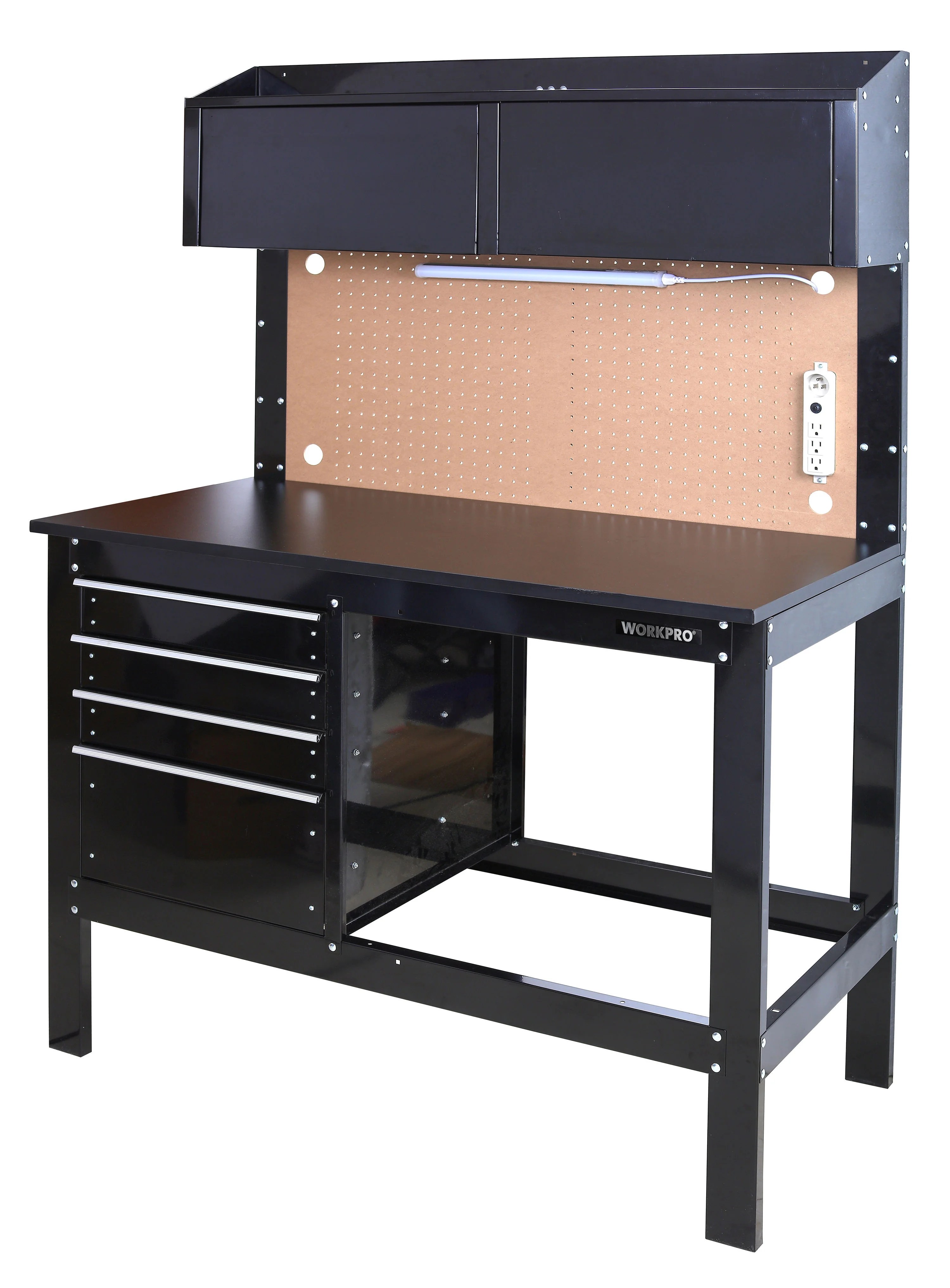
    Workpro 2-in-1 48in Workbench And Cabinet Combo With Work Light

    Workpro 2-in-1 48in workbench and cabinet combo with work light www.walmart.com

    Tennsco Adjustable Workbench — Wood Top, 60in.w X 30in.d, Medium Gray, Model# Wba-1-3060w

    Tennsco adjustable workbench — wood top, 60in.w x 30in.d, medium gray, model# wba-1-3060w www.northerntool.com

    Homak Garage Series 5 Ft. Industrial Steel Workbench With Cabinet Storage-gs00659031

    Homak garage series 5 ft. industrial steel workbench with cabinet storage-gs00659031 www.homedepot.com

    165+ Masterplan Noel

    Noel 2020 www.pmcc4w.ca

    Introduction: A DIY Adventure in Crafting a Simple Wooden Box So you're looking to build a basic wooden box! Fantastic. This is a great beginner project that teaches fundamental woodworking skills. This guide will walk you through the process step-by-step, using minimal tools and materials. We'll cover everything from gathering supplies to the final assembly.
    Materials and Tools You'll Need Before we start, let's gather everything. Here's a list of what you'll need:
  • Wood: Choose a soft wood like pine or poplar, about 1/2 to 3/4 inch thick. You'll need enough for the four sides, a bottom, and optionally a lid. Decide on your box dimensions beforehand so you know how much wood to buy.
  • Saw: A hand saw or a circular saw will work. A hand saw is cheaper and great for beginners, but a circular saw will make faster, straighter cuts.
  • Measuring Tape or Ruler: Essential for accurate measurements.
  • Pencil: For marking your cut lines.
  • Sandpaper: Various grits (80, 120, 220) for smoothing the wood.
  • Wood Glue: For securely joining the box sides and bottom.
  • Clamps: To hold the pieces together while the glue dries. Spring clamps or bar clamps are ideal.
  • Safety Glasses: Always protect your eyes!
  • Step 1: Measuring and Cutting the Wood This is where precision matters!
  • Measure: Carefully measure and mark the dimensions for your box sides, bottom, and lid (if you're adding one). Remember to account for the thickness of the wood when determining the dimensions of the bottom. For example, if your box sides are 6 inches tall and the wood is 1/2 inch thick, your bottom piece should be the desired width of the box minus 1 inch (1/2 inch for each side).
  • Cut: Using your saw, carefully cut the wood along the marked lines. Aim for straight, clean cuts. If you're using a hand saw, take your time and use steady strokes. If using a circular saw, use a guide rail for straight cuts.
  • Step 2: Sanding the Wood A smooth finish is key!
  • Coarse Sanding: Start with 80-grit sandpaper to remove any rough edges or imperfections from the cuts.
  • Medium Sanding: Move to 120-grit sandpaper to further smooth the surface.
  • Fine Sanding: Finish with 220-grit sandpaper for a smooth, paintable (or stainable) finish.
  • Edges: Pay extra attention to sanding the edges to prevent splinters.
  • Step 3: Assembling the Box Now it's time to put it all together!
  • Glue the Sides: Apply a thin, even layer of wood glue to the edges of the side pieces that will be joined.
  • Clamp the Sides: Carefully align the side pieces and clamp them together. Make sure the corners are square. Use a carpenter's square or a right-angle triangle to check for squareness.
  • Glue and Attach the Bottom: Apply glue to the bottom edges of the box sides. Place the bottom piece onto the glued edges, ensuring it's flush with the sides.
  • Clamp the Bottom: Clamp the bottom piece in place.
  • Drying Time: Allow the glue to dry completely, typically 24 hours. Check the glue manufacturer's instructions for specific drying times.
  • Clean Up: Once the glue is dry, remove the clamps and scrape away any excess glue that has squeezed out.
  • Step 4: (Optional) Adding a Lid If you want a lid, here's how:
  • Measure and Cut the Lid: Measure the opening of the box and cut a piece of wood slightly larger than the opening.
  • Sand the Lid: Sand the lid using the same sanding process as the box.
  • Hinges (Optional): If you want a hinged lid, attach hinges to the lid and the back of the box using screws. Be sure to pre-drill pilot holes to prevent the wood from splitting.
  • Fit the Lid: Test the fit of the lid. Sand or plane the edges if necessary to ensure a smooth fit.
  • Step 5: Finishing Touches Almost done!
  • Finishing: You can now paint, stain, or varnish the box to protect the wood and enhance its appearance. Choose a finish that complements the type of wood you used.
  • Sanding Between Coats: If you're painting or varnishing, lightly sand between coats with 220-grit sandpaper for a smoother finish.
  • Conclusion: Your Finished Wooden Box Congratulations! You've successfully built a simple wooden box. This project has given you valuable experience in measuring, cutting, sanding, and assembling wood. Feel free to customize your box with different finishes, hardware, or decorative elements. Now you can use it to store trinkets, organize supplies, or give as a personalized gift. Enjoy your new handcrafted creation!

    Noel, Noel

    Noel, noel www.cottoncashmerecathair.com

    Noel, The Master Of The Masterplan

    Noel, the master of the masterplan www.pinterest.com

    Noel 2020

    Noel 2020 www.pmcc4w.ca

    Tuesday, November 11, 2025

    168+ Woodworking File Cabinet Plans Pdf Free Download

    Free woodworking plans pdf download plansforwoodworking714.weebly.com

    Opening: The Essential DIY File Cabinet Guide Ever feel like your home office is drowning in paperwork? A well-organized file cabinet is a game-changer. Skip the expensive store-bought options and build your own! This step-by-step guide will walk you through creating a functional and stylish DIY file cabinet.
    Step 1: Planning & Materials Before you start cutting wood, you'll need a plan. Consider how many drawers you need, the size of your files (letter or legal), and the overall dimensions of your cabinet.
  • Materials List:
  • Plywood (typically ¾-inch thick) for the cabinet carcass, drawer boxes, and drawer fronts.
  • Wood for drawer slides (or pre-made drawer slides).
  • Screws (various lengths).
  • Wood glue.
  • Sandpaper (various grits).
  • Wood filler.
  • Paint, stain, or other finish.
  • Drawer pulls or knobs.
  • Edge banding (optional, for a finished look on plywood edges).
  • Tools Needed:
  • Saw (circular saw, table saw, or hand saw).
  • Drill/Driver.
  • Measuring tape.
  • Square.
  • Clamps.
  • Sander.
  • Safety glasses.
  • Dust mask.
  • Step 2: Cutting the Wood Based on your plan, carefully cut all the pieces of wood according to your measurements. Double-check your measurements before cutting to avoid errors. Pay close attention to the direction of the wood grain for a more aesthetically pleasing finish. Be sure to account for the thickness of the wood when calculating dimensions for internal components.
    Step 3: Assembling the Cabinet Carcass Start by assembling the main cabinet box. Apply wood glue to the edges of the plywood pieces and secure them with screws. Use clamps to hold the pieces together while the glue dries. Ensure the carcass is square by measuring diagonally – the measurements should be equal.
    Step 4: Building the Drawer Boxes Construct the drawer boxes using the same method as the cabinet carcass: glue and screw the plywood pieces together. The dimensions of the drawer boxes will depend on the size of your files and the type of drawer slides you are using. Make sure the drawer boxes fit snugly inside the cabinet opening, leaving enough room for the drawer slides.
    Step 5: Installing Drawer Slides Install the drawer slides inside the cabinet carcass and on the drawer boxes. Follow the manufacturer's instructions for your specific type of slides. Precise installation is crucial for smooth drawer operation. Consider using a spacer block to ensure consistent and accurate placement of the slides.
    Step 6: Attaching Drawer Fronts Attach the drawer fronts to the drawer boxes. You can use screws or construction adhesive. Ensure the drawer fronts are aligned properly and flush with the cabinet carcass. Using temporary screws can help to position the drawer fronts correctly before permanently attaching them.
    Step 7: Sanding and Finishing Sand all the surfaces of the cabinet and drawer boxes to create a smooth finish. Fill any gaps or imperfections with wood filler. Once the filler is dry, sand it smooth. Apply your chosen finish (paint, stain, or varnish) according to the manufacturer's instructions. Apply multiple coats for increased durability, sanding lightly between coats.
    Step 8: Adding Hardware Install drawer pulls or knobs on the drawer fronts. These can be purchased at any hardware store and come in a wide variety of styles to match your decor. Adding feet to the bottom of the cabinet can also improve its stability and protect your flooring.
    Conclusion: Your Custom File Cabinet Congratulations! You've successfully built your own DIY file cabinet. This project not only saves you money but also allows you to customize the cabinet to perfectly fit your needs and style. Enjoy your organized workspace!

    Woodworking File Cabinet Plans

    Woodworking file cabinet plans www.cintronbeveragegroup.com

    Woodworking Plans 2 Drawer File Cabinet

    Woodworking plans 2 drawer file cabinet freefurnitureplanner.blogspot.com

    Free Woodworking Plans Pdf Download

    Free woodworking plans pdf download plansforwoodworking714.weebly.com

    124+ 150 Free Woodworking Plans Pdf Free Download

    Number 150 stock photos, pictures & royalty-free images www.istockphoto.com

    Here's a step-by-step guide to building a simple wooden birdhouse, perfect for beginners!
    Introduction: A Cozy Home for Feathered Friends Building a birdhouse is a rewarding project that combines basic woodworking skills with the joy of providing a haven for local birds. This guide outlines a simple, effective design that's easy to construct with readily available materials. Get ready to create a charming addition to your backyard!
    Materials You'll Need:
  • A single pine board (1" x 6" x 6' or similar)
  • Wood glue
  • 1 1/4" exterior wood screws or nails
  • Sandpaper (various grits)
  • Exterior paint or wood stain (optional)
  • Drill with various drill bits
  • Saw (hand saw or circular saw)
  • Measuring tape
  • Pencil
  • Safety glasses
  • Step 1: Cutting the Wood Pieces Carefully measure and cut the following pieces from your pine board, using the dimensions provided. Double-check your measurements before cutting to ensure accuracy.
  • Front: 6" wide x 8" high
  • Back: 6" wide x 10" high
  • Sides (2): 6" wide x 7" high
  • Bottom: 6" wide x 6" deep
  • Roof (2): 7" wide x 8" long
  • Step 2: Creating the Entrance Hole On the front piece, measure and mark the center point approximately 2" down from the top edge. Use a drill bit suitable for the desired size of bird entrance hole (1 1/2" for larger birds like wrens and bluebirds, smaller for smaller birds). Drill the hole carefully. Smooth the edges of the hole with sandpaper.
    Step 3: Assembling the Birdhouse Body Apply wood glue to the edges where the sides meet the front, back, and bottom pieces. Align the pieces and secure them with screws or nails. Make sure the back piece extends 2" above the side pieces to create a slight overhang for the roof. This will help protect the entrance from the elements. Pre-drilling pilot holes for the screws will prevent the wood from splitting.
    Step 4: Attaching the Roof Apply wood glue to the top edges of the side, front, and back pieces. Position the roof pieces so they overhang slightly on all sides. Secure them with screws or nails. Ensure the roof is securely attached to prevent water from leaking into the birdhouse.
    Step 5: Adding Drainage and Ventilation Drill a few small drainage holes (1/4" diameter) in the bottom of the birdhouse to prevent water from accumulating. Also, drill a few small ventilation holes (1/4" diameter) near the top of the sides to provide airflow.
    Step 6: Sanding and Finishing Sand all surfaces of the birdhouse to remove any rough edges and splinters. Apply exterior paint or wood stain to protect the birdhouse from the weather and enhance its appearance. Be sure to use non-toxic paints or stains that are safe for birds. Let the paint or stain dry completely before placing the birdhouse outside.
    Conclusion: A New Home for Your Birdy Neighbors Congratulations, you've successfully built a simple wooden birdhouse! Hang your birdhouse in a suitable location, away from predators and harsh weather, and enjoy watching the birds move in. Remember to clean the birdhouse out annually after nesting season. Enjoy your new feathered neighbors!

    1,100+ Number 150 Stock Photos, Pictures & Royalty-free Images

    1,100+ number 150 stock photos, pictures & royalty-free images www.istockphoto.com

    Number 150 Stock Photos, Pictures & Royalty-free Images

    Number 150 stock photos, pictures & royalty-free images www.istockphoto.com

    Number 150 Stock Photos, Royalty Free Number 150 Images

    Number 150 stock photos, royalty free number 150 images depositphotos.com

    Monday, November 10, 2025

    126+ Workbench With Built-In Adjustable Height

    Ultrahd 72in adjustable height heavy-duty wood top workbench www.pinterest.com

    ```html
    Opening: Build Your Own Adjustable Height Workbench Are you tired of hunching over your workbench or struggling to reach your projects? An adjustable height workbench is the perfect solution! This guide will walk you through building your own sturdy and versatile workbench, customized to your exact needs. Let's get started!
    Step 1: Planning and Materials First, you need to decide on the size of your workbench and the desired height range. Consider the types of projects you'll be working on and the available space in your workshop. Once you have a plan, gather your materials:
  • Lumber (for the frame, legs, and work surface)
  • Adjustable height legs (available online or at hardware stores)
  • Screws, bolts, and washers
  • Wood glue
  • Sandpaper
  • Finish (paint, stain, or sealant)
  • Step 2: Building the Frame Cut the lumber according to your plan to create the frame. This usually consists of four pieces for the outer perimeter and additional pieces for internal support. Assemble the frame using screws and wood glue, ensuring it's square and sturdy. Use clamps to hold the pieces together while the glue dries.
    Step 3: Attaching the Adjustable Legs Attach the adjustable height legs to the corners of the frame. Follow the manufacturer's instructions for proper installation. Make sure the legs are securely fastened and can bear the weight of the workbench and your projects.
    Step 4: Creating the Work Surface Cut the lumber for the work surface to the desired size. You can use a single piece of wood or multiple pieces joined together. If using multiple pieces, glue and screw them together to create a solid surface. Attach the work surface to the frame using screws from underneath.
    Step 5: Sanding and Finishing Sand the entire workbench to smooth out any rough edges or splinters. Start with a coarser grit sandpaper and gradually move to finer grits. Once sanded, apply your chosen finish to protect the wood and enhance its appearance. Follow the manufacturer's instructions for the finish you're using.
    Step 6: Adding Optional Features Consider adding optional features to your workbench, such as:
  • A vise
  • Drawers or shelves for storage
  • A power strip for convenient access to electricity
  • A pegboard for tool organization
  • Install these features according to their respective instructions.
    Conclusion: Your Adjustable Height Workbench is Ready! Congratulations! You've successfully built your own adjustable height workbench. Now you can enjoy a comfortable and ergonomic workspace that's perfectly tailored to your needs. Adjust the height as needed for different tasks and enjoy the benefits of a customized workbench.
    ```

    Adjustable Height Workbench

    Adjustable height workbench jack-bench.com

    Ultrahd 72in Adjustable Height Heavy-duty Wood Top Workbench

    Ultrahd 72in adjustable height heavy-duty wood top workbench www.pinterest.com

    Amazon.com: Adjustable Height Workbench

    Amazon.com: adjustable height workbench www.amazon.com