
 fity.club
 Introduction: The Ergonomic DIY Workbench Tired of hunching over a workbench that's the wrong height? This post guides you through building your own adjustable height workbench, custom-fitted to your needs. This project involves woodworking skills and basic metalworking knowledge. It's a rewarding build that will significantly improve your workshop experience.
Materials and Tools: Gather Your Supplies Before you begin, gather these materials and tools:
- Lumber: Dimension lumber for the frame (2x4s recommended), and plywood or solid wood for the workbench top (3/4" thickness). The amount of lumber needed will depend on the desired size of your workbench.
- Adjustable Height Legs: Pre-made adjustable height legs (metal or heavy-duty plastic) or components to build your own telescoping leg system. Measure the desired adjustment range before purchasing.
- Fasteners: Wood screws, bolts, nuts, washers, and optionally, pocket hole screws.
- Metal for Leg Reinforcement: If you're building your own telescoping legs, you'll need metal tubing or angle iron.
- Welding Equipment (if needed): If building metal leg supports.
- Woodworking Tools: Saw (circular saw, miter saw, or hand saw), drill, screwdriver, measuring tape, level, square, clamps.
- Metalworking Tools (if needed): Welder, grinder, metal cutting saw.
- Safety Gear: Safety glasses, ear protection, work gloves.
- Finishing Supplies: Sandpaper, wood stain, sealant (optional).
Step 1: Plan and Design Plan the dimensions of your workbench. Consider the available space in your workshop and the type of projects you'll be working on. Determine the desired height range. Sketch out your design, including the frame, top, and the placement of the adjustable height legs. Decide if you are purchasing pre-made adjustable legs or fabricating your own. If fabricating legs, decide if you will be welding them or using bolted connections.
Step 2: Build the Workbench Frame Cut the lumber according to your design. Assemble the frame using wood screws or pocket hole screws. Ensure the frame is square and level. Clamps are helpful for holding the pieces together while fastening. Add cross braces for added stability. The frame should be sturdy enough to support the workbench top and any weight you'll be placing on it.
Step 3: Prepare the Workbench Top Cut the plywood or solid wood to the desired size for the workbench top. Sand the top smooth, paying attention to the edges. If using multiple pieces of wood for the top, glue and clamp them together to create a single solid surface. Apply a finish (stain and sealant) if desired.
Step 4: Attach the Adjustable Height Legs Option A: Pre-Made Legs Attach the pre-made adjustable height legs to the underside of the workbench frame according to the manufacturer's instructions. Ensure the legs are securely fastened and properly aligned.
Step 4: Attach the Adjustable Height Legs Option B: DIY Telescoping Legs (Welded) Cut the metal tubing to the correct lengths for the inner and outer tubes of the telescoping legs. Weld reinforcing plates or brackets to the outer tubes. Drill holes in both tubes for a locking mechanism (e.g., a pin or bolt). Test the telescoping action and ensure it moves smoothly. Attach the legs to the workbench frame by welding or bolting.
Step 4: Attach the Adjustable Height Legs Option C: DIY Telescoping Legs (Bolted) Cut the metal tubing or angle iron to the correct lengths for the inner and outer sections of the telescoping legs. Use bolts and nuts to create sliding connections between the inner and outer sections. Reinforce the connections with additional plates or brackets as needed. Drill holes in both sections for a locking mechanism. Attach the legs to the workbench frame using bolts.
Step 5: Attach the Workbench Top Carefully position the workbench top onto the frame. Secure it to the frame using wood screws from underneath. Make sure the screws are not too long, as they could protrude through the top. Countersink the screws for a flush finish.
Step 6: Finishing Touches Inspect the entire workbench for any sharp edges or loose fasteners. Sand any rough spots. Apply a final coat of sealant to the workbench top if desired. Test the adjustable height mechanism to ensure it works smoothly and locks securely at different heights. Add any desired accessories, such as a vise, tool storage, or a power strip.
Conclusion: Enjoy Your Custom Workbench Congratulations! You've built your own adjustable height workbench. Enjoy the comfort and versatility of a workbench tailored to your specific needs. Regularly inspect the workbench and maintain the adjustable height mechanism for optimal performance. This workbench should provide years of comfortable and productive use.
Nice Workbench Ideas
fity.club Workpro 2-in-1 48in Workbench And Cabinet Combo With Work Light
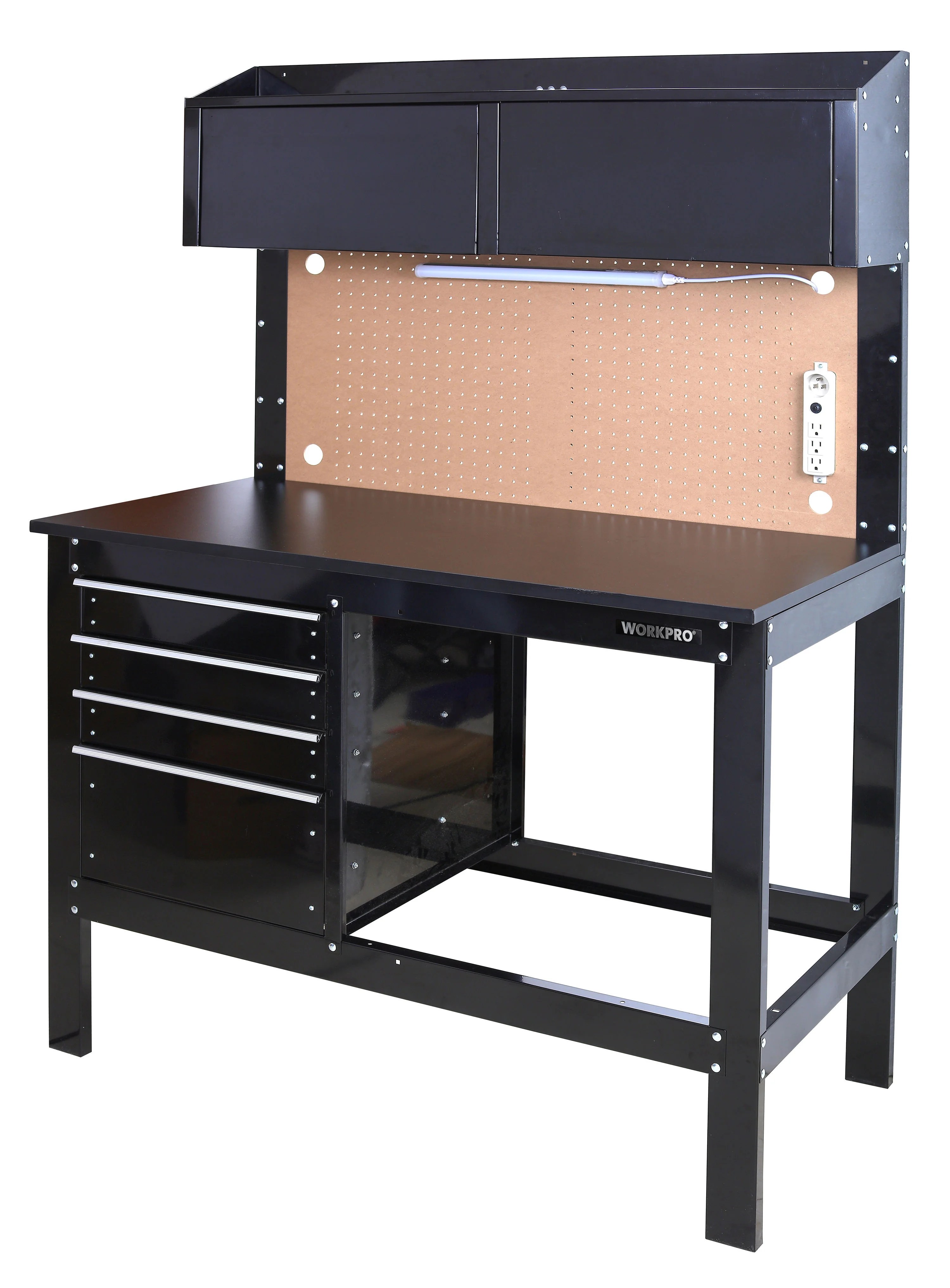 www.walmart.com
 Homak Garage Series 5 Ft. Industrial Steel Workbench With Cabinet Storage-gs00659031
 www.homedepot.com


0 comments:
Post a Comment